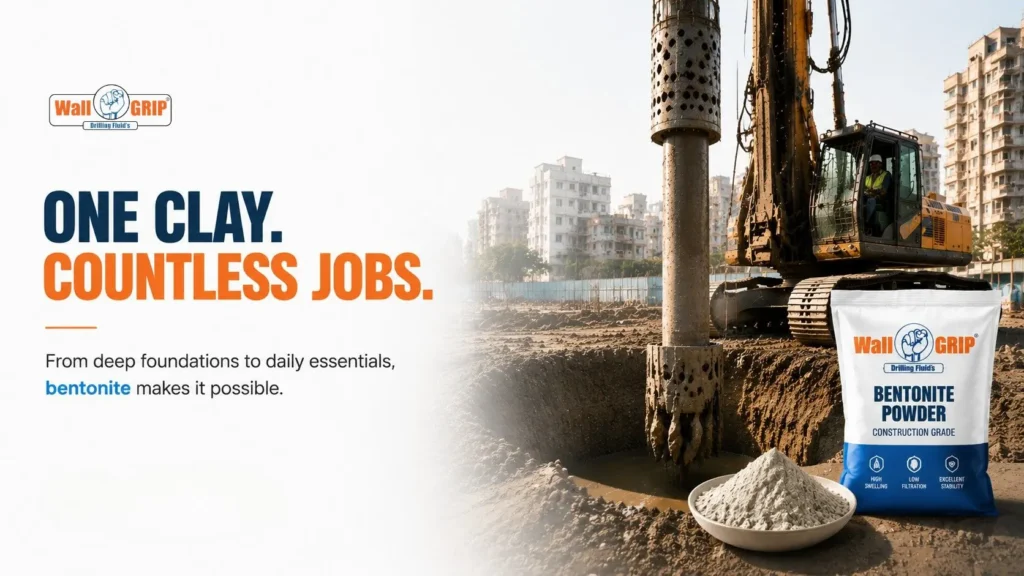
A single type of clay can solve problems in completely different industries. It’s called bentonite. Its trick is simple. When it touches water, it swells up. It can swell 12 to 15 times its dry volume.
Here’s the interesting part: this same clay helps build a metro station as well as clean oily skin. One clay, two very different jobs. And there’s more to come.
There are two main types of bentonite powder, and the difference comes down to what sits between the clay’s tiny layers.
Sodium bentonite has sodium in between its layers. Sodium pulls in a large amount of water, which is why it can swell 12 to 15 times its dry volume. That huge swelling is exactly what makes it useful for construction, drilling, and sealing, jobs where you need the clay to expand and hold its ground.
Calcium bentonite has calcium between its layers instead. Calcium holds the layers together more tightly, so that less water gets pulled in, and it swells much less. But, it’s rich in minerals, which is why this is the type used in skincare and health products instead.
Same clay family, different minerals inside it, and that one difference decides which industry it ends up in.
Here’s where each type is actually put to work, and why it’s the right material for the job.
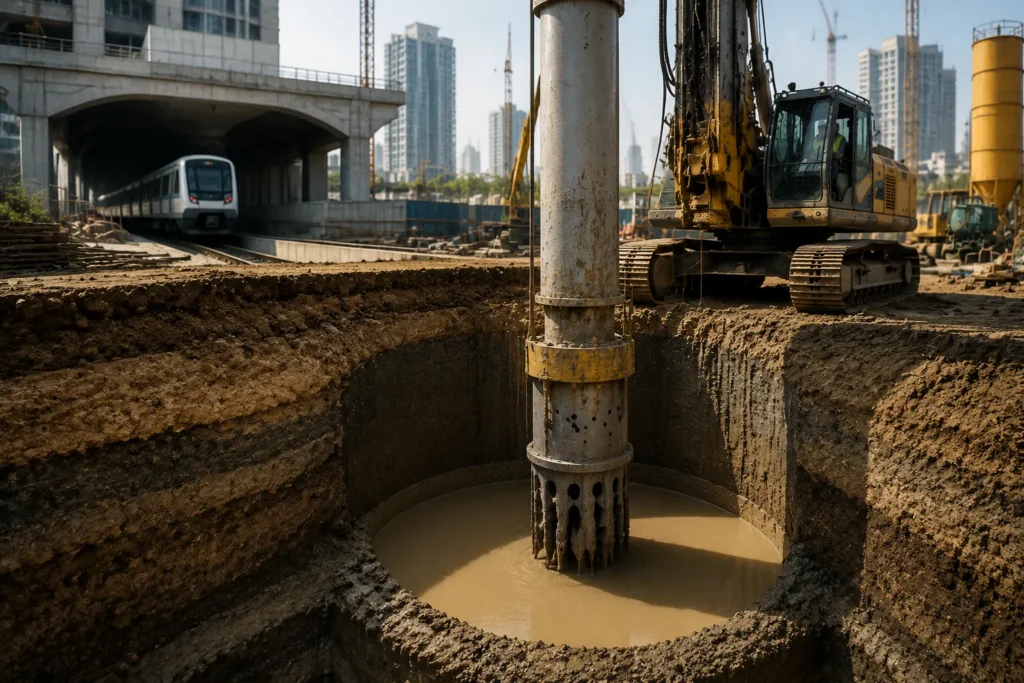
Where Bentonite Is Used
1. Metro Stations and Tall Buildings Workers dig a deep hole before building starts. Soft ground can make that hole collapse. Bentonite powder mixed with water is poured in to hold the hole open until the work is done. In India, this is checked against a rule book called IS:2911.
2. Long Tunnels The same trick, at a bigger scale. Bentonite powder is used around the digging head of a tunnelling machine to keep the loose ground from collapsing.
3. Garbage Dumping Grounds Bentonite powder is used under large dumping grounds. Once it swells, it becomes so thick that dirty water can’t easily pass through it, so it doesn’t reach the ground below.
4. Parts for Cars and Machines Factories use bentonite to hold sand together in the shape of a mould. Hot metal is poured into that mould to make parts for cars, bikes, or machines.
5. Oil Drilling The same mixture used in construction is used underground for oil drilling too. It keeps the drilled hole from collapsing.
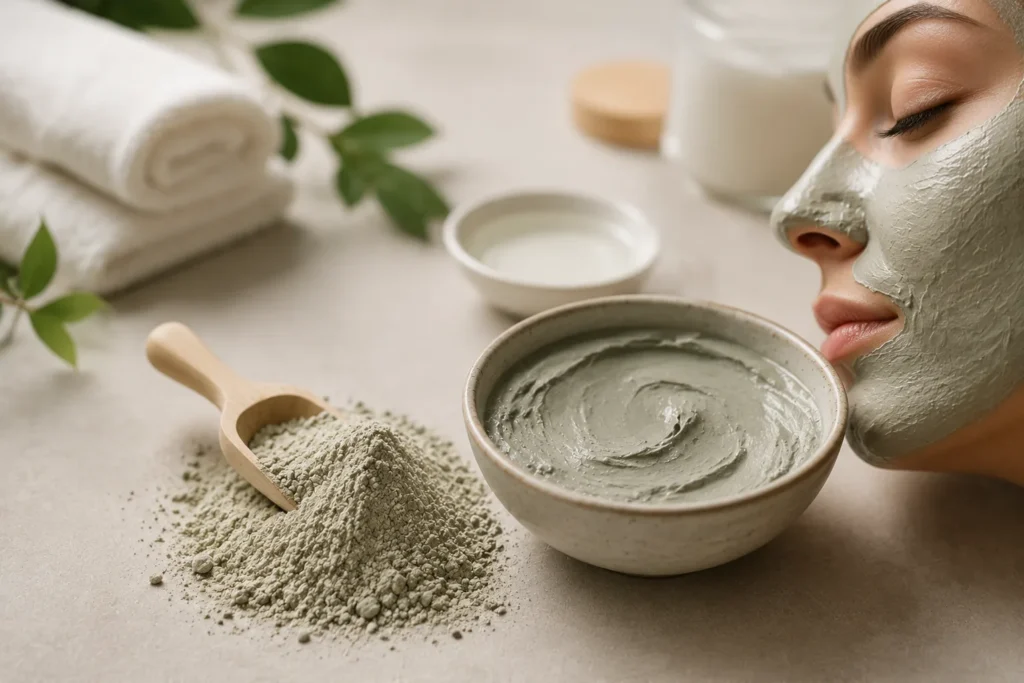
6. Face Packs Multani mitti, the clay used for generations in Indian face packs, is a close cousin of bentonite. They’re not the same clay, but they work in a similar way, both pulling oil and dirt out of the skin as they dry.
7. Animal Feed Small amounts are added to feed for cows and buffaloes. It can catch certain harmful substances before the animal’s body absorbs them.
Every Use, At a Glance
| Where It’s Used | What Bentonite Does There |
| Metro stations, buildings | Holds the dug hole open |
| Long tunnels | Keeps loose ground from collapsing |
| Garbage dumping grounds | Stops dirty water from leaking through |
| Car and machine parts | Holds the sand mould together |
| Oil drilling | Keeps the drilled hole from collapsing |
| Face packs | Pulls oil and dirt from skin |
| Animal feed | Catches harmful substances |
The One Thing Worth Remembering
Every use above comes from the same trick, one clay, swelling in water. But the type strong enough to hold up a metro tunnel is not the type that belongs in a face pack.
If you’re buying it for construction, always ask for construction-grade or piling-grade bentonite by name, not just “bentonite powder.”
If you need it for piling, tunnelling, or foundation work, WallGrip’s bentonite powder is made exactly for that. It’s tested against IS:2911, with full technical details available on request.